Showing posts with label folk. Show all posts

Tuesday, November 23, 2010

Junior McGinniss

I've always thought of myself as German. The name Walljasper comes from a region in Western Germany known as Westphalia. The story that has been told to me is that the Walljaspers came to America in the mid 1800's by way of the port of New Orleans, traveled up the Mississippi and finally landed on what is current day Southeast Iowa. A family of five - mother, father, and three brothers, from which the three clusters of Walljasper that currently reside in the various regions of Eastern Iowa hail.

But this weekend I heard a story of a less prevalent, if not just as spirited ethnicity that flows through my blood. The Irish.

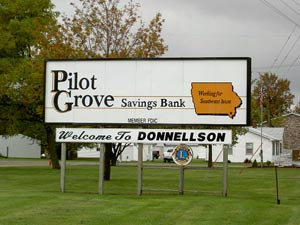
My grandfather, Leroy Joseph Walljasper is the source for our families' Irish lineage. His mother, Maiden name McGinniss, was 100% emerald Isle. While visiting my own homeland (Donnellson, IA), Grandpa, sipping his whiskey, told me a story that reveals an interesting aspect of our family tree. This is a story about Junior McGinniss.

Junior, as my grandfather remembers it, was a man of considerable size. He was a farmer, as most of our family has been, so had a leathery toughness that one gets from long hours and extreme conditions. Junior worked hard, but like his work ethic, Junior knew how to have fun as well.

One of his favorite means of entertainment would be to play guitar at a family owned bar in New London, Iowa – The Farmers Tap. He and a pal named Buddy Jones would play almost every weekend at The Tap, which meant, as a boy in the 1940's, Leroy would be allowed to accompany his parents into town for the evening. The Alamo, a movie theater sat across the street from the tavern, so all the kids would dart across the two lane thoroughfare, pay their 25 cents, and be content for a few hours as they escaped the realities of their prepubescent lives. After the films, they'd return to the The Farmers Tap.

The band would still be rocking when they returned, but the owner let them sit along the wall and watch until the night was over. As grandpa recounts, this could be more entertaining than the features they watched at The Alamo.

They'd watch the people dancing, flirting, and drinking. They'd see their parents, affectionately carousing. And sometimes, they'd see a few folks get a little too lit, get into a disagreement, and then they'd watch as the whole thing dissolved into fisticuffs.

When fights broke out, Junior and Buddy stepped in. They served not only as the entertainment, but also as the security muscle. Grandpa remembers six concrete steps that led up to the front door of The Farmers Tap, and when Junior McGinniss and Buddy got a hold of you, you missed everyone of them as you sailed out the front door and landed squarely on your keister.

By midnight, most of the domestic types had indulged their fill. They paid their tabs, collected their coats and children, and made their way home. For Junior and Buddy however, the night was still young. They'd proceeded an additional twenty five miles through back country roads to Burlington, then across the bridge, into Gulfport, Illinois. Gulfport, to this day, is synonymous with one thing in Southeast Iowa. Strip clubs.

That is where my Grandfathers story ends, but I'm sure that there are many more anecdotes about Junior, Buddy, and all the rest of my Irish forebears.

As I listened to his story unfold, I couldn't help but be drawn into his tale. My grandfather, farmer by trade, has a way of telling a story that catches your attention, makes you lean in close to catch every detail, and lands the punchline at just the right moment, every time. It's something about the cadence of his voice, the word play that is a part of the rural vernacular of Southeast Iowa, or the pure joy that comes from Grandpa as he tells these stories, but I could listen to them for hours. Maybe they're not near as interesting to people who don't know Leroy Walljasper, but I find them as enthralling as any I've ever heard.

My friend Brian Wilcoxon, upon hearing this story, was so inspired that he wrote a song about old Junior McGinniss. In my opinion, it perfectly captures the essence of the story.


Junior McGinniss


Now sit ye' right down
And I’ll tell ye' a tale 
Of young Junior McGinniss 
That I knew so well 
Young men came to hear  
From miles around 
The boy’s sweet guitar 
and its curious sound 

He’d play for the lads
And he’d play for the lasses
At every song’s end 
He’d drink down two glasses 
And toast to the dancers 
Who’d cheer him by name 
And say “Junior McGinniss 
So glad that you came!” 

He’d sing about future
He’d sing about past 
And he’d play on til dawn and the 
Sunday’s first mass 
And the priest during prayer
Would give quite a yawn 
From drinking the dear blood  
Of Christ all night long 

Young Junior he really  
Could be quite a cuss 
A pain in the arse 
He could be when he must 
All the rounders who came in
To spoil his fun  
He’d throw down seven steps 
without touching a-one
When the dancin’ wore down
He’d pull out a jug
Of the good ole white gin
That he made in his tub
And we’d sing him a song
And young Junior’d get down
And go dancin’ and dancin
All over the town
 
Young Junior McGinniss
Is “young Junior” no more
He’s old and he’s grown
And moved on past the shore
But i know that no days
Will no happier be
Than with Junior McGinniss’
Time here with me

Sunday, November 21, 2010

The Holiday Buffet

I've recently discovered an amazing new restaurant in the Quad Cities' – Capriotti's. The one singular item that makes this sandwich shop stand out above the half dozen other sandwich shops in the metro area is a delicatessen treat known as “The Bobbie”.

“The Bobbie” is the general equivalent to the sandwich one might make on the day after thanksgiving. The start with a supple, sweet, hoagie bun. Adding in a generous helping of shredded cold turkey, they dollop on a succulent cranberry sauce, followed by just the right blend of stuffing, and top it all off with a generous slathering of mayonnaise. It is one of the most enjoyable sandwiches known to this man.

I was conveying the awesomeness of Capriotti's to my friend Dan one evening, when we stumbled upon a brilliant idea for a restaurant – The Holiday Buffet.

It would be rows upon rows of buffets, each with a festive holiday theme. At each bar our beaming patrons would find their favorite foods from that corresponding day of celebration.

There would be watermelon and fried chicken at the Independence day buffet. At the Easter buffet you'd find ham and colored eggs. Thanksgiving would have the obligatory turkey, with all the stuffing, cranberries, potatoes, yams, and the like. We might have a Presidents day buffet, with some of the past oval office food favorites. Memorial day deviled eggs and marshmallow fluff. You get the picture.

We wouldn't be selectively American and Christian in our holiday selection. We'd have matzoh balls for passover, baba ghanoush and hummus for Ramadan (this buffet would only be open between sundown and sun rise).

From this conversation grew the spark for a song.

A long distance truck driver, stuck far away from his family on the night before Thanksgiving. He stops at a mysterious restaurant to clear his head and recharge – The Holiday Buffet. There he finds an impressive array of foods from every holiday of his past. The emotional connection to this food is magical – the reminiscence makes this hard old truck driver want to stay and eat forever, safe from the cold, lonely road.

But the Holiday Buffet isn't the real thing – the food we eat on these special days is not what makes the festivities memorable. It's the people we're with. It's the stories we share. It's the love of family that makes the food such a powerful force.

So the trucker tears himself away from the buffet and trucks on, drawing ever closer to his family, his real holiday experience.

Call it a Christmas take on The Eagles' “Hotel California”.

Listen, enjoy, and comment.


Holiday Buffet
I'm out on the road again
This cold November wind, sure ain't no ones friend
Haulin' 30 tons down the line
Tryin' to get home this holiday to be with mine

My eyes are bleary, head is groggy - way up there
I see a shining light I see an answer to my prayer
The neon warms my soul tells me everything's OK
As I break these 16 wheels at the Holiday Buffet

Oh my soul
I don't know
I ain't never heard of
No Holiday Buffet

Oh my soul
As I slow
I think I like the looks
Of this Holiday Buffet

I strolled down the aisles
I could hardly believe my eyes
I saw festive treats
All color shape and size

Began to fill my plates
Those memories return
Pullin' at my heart strings
Makin' my stomach yearn

Oh my soul
Where'd you go
Those memories come floodin' back
At the Holiday Buffet

Oh my soul
Row by row
This food it takes me back
At the Holiday Buffet

Independence watermelon
A slab of sweet Easter ham
President's day cherry pie
Thanksgiving yams

Tacos for Cinco de Mayo, corn beef & cabbage for Patty's day.
I keep fillin' plates
Tryin' to eat my blues away

All this food around me
Sure is good but it ain't right
Fillin' up my belly
on this lonely winter night

This feast ain't what I need,
Gotta get away
Gotta drive all night
from this Holiday Buffet.

Oh my soul
Where'd you go
You cannot fill that hole
with a Holiday Buffet

Oh my soul
Row by Row
Flyin' through the snow
From the Holiday Buffet

Every now and then
Haulin' through the east
I think I see a neon sign
I think I smell a feast

Although I wish I could
Sometimes I think I might
Can't find that Holiday Buffet
From that cold winter night

What do I want for Christmas? For you to get on Twitter and Facebook and tell your friends about Musings of a Renaissance Man in Training. 

Oh! look here - a button for you to do that right now!

Tuesday, November 9, 2010

Put Your Patience in the Corner


In high school I bought an old fixer upper pickup truck at an auction. I have fond memories of the old beater, despite the fact that it sat defunct more often than it ran. When it did run, the heater worked in fits and starts, the acceleration was horrible, due in part to the fact that the carburetor was on it's last leg, and the radio was stuck on the same talk radio station.

Over the five years I had the old red Mazda, I replaced the entire fuel system, planed the head and replaced the head gasket, and finally removed the entire engine in an attempt to fix a damaged crankshaft. I learned a great deal about automotive repair over the course of that truck's life. I also lost my cool a number of times. One afternoon in particular, I was replacing the fuel tank in the old clunker which, on paper, should have been a fairly quick process. I was in my grandfather's tool shed, squirming around on the dirt floor while manhandling the 50 pound tank around struts, fuel lines, and electrical conduit. From the colorful language spewing out of my gritted teeth, an onlooker would have though I was wrestling a cougar underneath the bed of the truck. Reaching an impasse, I shimmied out from under the chassis, threw down my pliers, kicked the truck, and stormed towards the door. My grandfather, who'd been observing the entire display of frustration, stopped me with a wise hand,
My Patience out of the Corner

“Now Chris. Put your patience in the corner.”

I spun around, still in a pestilent fury. My emotions were still enraged at the obstinate vehicle, but my mind reeled as it tried to wrap itself around this bizarre phrase.

“What the hell does that mean, grandpa?!?”

As it turned out, the phrase was something my great grandfather, Lawrence, would say to grandpa when he was in a tempestuous fervor. When stopping and thinking about the incipience of the word, grandpa was as taken aback as I was.

“I don't know what it means, It's just something he always said to me. Put your patience in the corner.”

Whatever its history, the phrase served its purpose. It got me out of the emotional, illogical state I was in and got me back into that cerebral, analytical frame of mind in which I needed to be. I was still pissed at the truck, but at least now I could look at the problem objectively. I got back to work and soon had the tank installed.

The phrase has come back a number of times as I've worked on projects with my grandfather, though now it is as much a running joke as it is a true quip of wisdom. I still don't know where the term originated. Neither does the internet, or at least not Google. Whatever the reference, it is a phrase that will surely live with me, and probably be imparted onto my children in times of anxiety and vitriol.

I've long thought that the phrase would work well in a song, but I've never been sure of how to work it into the music. Then this came to me a few weeks ago. Call this song an homage to my Grandfather – Leonard Bernard Stephen Overberg - a man who's by all means fallible, but works hard and does his best with the life that's been given to him. One hell of a man.

Put your Patience in the Corner

Lennie Stevens is a friend of mine
Imparts his wisdom over dandelion wine
Hands like tree roots and a farmers tan
Lennie works hard. Lennie is a hell of a man

Born in the heartland, Midwestern drive
Lennie's spent his whole life working to survive
He trades his dollars for tractors and grain
When I ask him why, he just smiles
then he explains

Wherever you're going, wherever you've been
You've always gotta try your best but your always gonna sin
So when you stumble, when you lose your cool
Put your patience in the corner and it'll see you through

Lennie Stevens is a God fearing soul
puts on his suit coat and he sits in the front row
Folds up his hands as he pleads with the sky
If you ask him why he prays this will be his reply

Wherever you're going, wherever you've been
You might get dealt a hell of a hand, that you just cant win
So when you hate the world, you don't know what to do
Put your patience in the corner and it'll see you through

Wherever you're going, wherever you've been
You've always gotta try your best but your always gonna sin
So when you stumble, when you lose your cool
Put your patience in the corner and it'll see you through


What do you think Put your patience in the corner means? Share your explanation, and maybe together we'll figure it out.

Friday, October 22, 2010

A Side-Splitting tale of Medical Marvel

I worked several jobs to get through college, both during the summers and while in school. The most consistent employment was the three year tenure I held at Walljasper construction, my grandfathers Vermeer baler implement. I never had an official title, but in practicality, it ranged from office manager to baler technician to farm hand.

Sporting a Walljasper Construction hat
I inventoried parts as they came in. I built hay mowers, rakes, and tedders like they were giant Lego sets. I serviced balers that stood fifteen feet high and spit out six foot round bails from their pneumatic maws. They were like giant jungle gyms for adults – the only differences being that this playground was equipped with giant roller bars that, if not properly restrained, could crush me like a corn flake, and generally I was required to scramble across its surface wielding a blowtorch and a hammer, the only tools capable of breaking free the ball bearings we commonly replaced. Every day was different, every task brought on a new challenge that generally led to a string of curse words that were common vernacular around the shop. There was a particular eight word expletive stream that flowed so easily from the mouth, it seemed to be the standard expression of complete frustration among men of my family. Any timidity I had when I first entered this job was soon lost as I smashed fingers, ran over toes, caught my hair, or banged my knee. Couple these mild injuries with the healthy dose of uber-machismo heckling I received from everyone save my grandfather, and I quickly learned that it was better to shut my mouth or let forth an exasperated fray of flower wilting utterances than to whine about the ailments that befell me.

The characters I met during my summers at the shop were among the most peculiar bunch I will ever encounter. Many of them lacked the book knowledge I was so proud of attaining as a sophomore in college, and I looked down on them for it. I thought that they were inferior for their ignorance. But what many of the farmers I met lacked in philosophical know-how, they made up for in honest labor and experiential wisdom. They knew more about the land they worked and the crops they harvested than I'll ever know about any one subject. They knew more about the weather than any meteorologist, and any one of the men I met in those ungodly hot Iowa summers could jury rig a broken down piece of machinery in a field a hundred miles from nowhere with some baler twine, a pair of pliers, and a can of chain lube.

The summer after my Sophomore year of college, I resumed my post in the shop, just in time for prime baling season to hit in mid May. Not three months earlier, I began dating a Junior at Monmouth College, the girl who would later become Mrs. Chris Walljasper. Before leaving school, we agreed that Annie would come down from suburban Chicago to visit and meet my family. She had experienced limited agrarian life, and was excited to meet my grandparents, learn about where I grew up, and see where I worked. So one sultry summer afternoon, she embarked upon the journey.

Annie was supposed to arrive a few hours after I got off work, giving me ample time to clean up before seeing her. In her excitement to be reunited with her new love, she showed up about three hours premature, discovering me at the shop, elbow deep in baler chains and grease. It was an amazing surprise, and I was ecstatic at the sight of my future wife, dressed like a million bucks and there just to see dirty ol' me.

She cutely attempted to help me on the baler for a few moments, but we soon realized that this was not the best idea, considering her polished attire. I sent her into the air conditioned office, where I would soon be finishing the day out before going home. I assumed that this would be the best place for Annie. Evidently, I was mistaken.

When I completed the repair on the machine, I joined my girl in the office, only to find that she was being entertained by an unintentional yet eccentric guest. And appearances were not as they seemed.

A farmer, who's name I'll leave out of this anecdote, had come by the shop office while I was busy, wanting a part for his hay mower. The man was honestly one of the nicest guys who worked with my grandfather, but did not come across as an incredibly learned man. The cleft pallet that divided his upper lip was the main culprit in giving our agrarian friend the appearance of a less than philosophical personality. He was never incredibly concerned about his attire, which on that particular day, was composed of a blue vented cap, a flannel button down shirt, a pair of shabby gray sweat pants, and Velcro strapped shoes. This was particularly slovenly for the farmer, but none of these characteristics, by themselves, were enough to be a cause for concern.

The thing that had Annie's jaw on the ground was the fact that one of the mans arms appeared to be firmly planted inside his jersey trousers, dangerously close to what she logically concluded were his genitalia. Upon entering the office, I strolled to the pop machine, grabbed a soda, and meandered to the counter before realizing that Annie was shooting me desperate looks as she feigned interest in whatever the farmer was chatting about. Mr. hand-in-pants, not phased by Annie's look of utter horror at the evident impropriety, kept talking, chatting away as if nothing was amiss.

I cordially assisted the man, providing the parts he'd come in for, and after he left, burst into laughter. I knew exactly what Annie had been thinking, and couldn't wait to hear what she had to say.

“What was that man doing?!? His hand was...it was...Was he, TOUCHING HIMSELF?!?!?!”

Picking myself off the floor, I wiped the tears from my eyes and began to explain the bizarre story of our one armed friend.

The man owned a Model K baler. It was a newer vintage, equipped with an additional piece of equipment on the tail of the machine that, upon completion of a six foot round bale of hay, would administer a cellophane like wrapping around the circumference of the bale. This feature was the pride and joy of Vermeer, but after a few months of constant use, the rollers that conveyed the net wrap would collect remnants of the polyvinyl product and eventually stop the wrapping process. When this happens, it is recommended that the farmer bring the machine to the implement, where a technician could service it. Our farmer did not heed this advice.

I do not know the specifics of the incident, but evidently, the baler jammed up, so he hopped off the tractor to see what was the matter, and, finding the net wrap rollers incapacitated, took out his trusty pocket knife and began whittling away at the clog. This would have been a perfectly acceptable remedy, had the PTO been disconnected and the roller halted. But that was not the case. In seconds, both of his hands were caught by the spinning cylinder and forcibly run through the machine. At this point, I personally would have passed out. The grizzliness of this event is enough to make my stomach churn even now. But for his lack of foresight, this guy was tough. He retrieved the dismembered pieces of his opposable digits and made it across the field to his truck, where he proceeded to drive over ten miles back to his home, where his wife then escorted him to the hospital. Through all the pain and blood loss, he remained cognizant and focused enough to attain the medical attention necessary. But this isn't where the story ends.

The practice of reattaching a persons severed digits, then sewing them into the abdomen is evidently not common, as everyone who I've told this story to has been either appalled or dumbstruck. The technical term is Autografting, transferring flesh from one part of the body to another. By inserting the reattached thumb into his stomach, the healing properties of the abdominal cavity promoted blood circulation and nerve regeneration. To its credit, the unorthodox procedure resulted in a fairly successful use of his hand, when everything was said and done.

I explained all of this to Annie, who was dubious, to say the least. Upon verification from several other members of my family, she was finally convinced. I wouldn't believe it either, if I hadn't seen it myself. 

The miracle of modern scientific ingenuity prevailed to save this mans ability to hold up the underside of a sandwich for another day.

Tuesday, October 19, 2010

Pistols to Plowshares


I was listening to an excessive amount of William Elliot Whitmore a few weeks back. Whitmore always gets me feeling reminiscent for home and a more agrarian life in southeast Iowa. Now my childhood in Donnellson, Iowa was no where near a country life. Residing in a town of 946, resplendent with baseball fields, a city park, and a public pool, I was seen as a soft city kid. I didn't raise animals, save the cats and dogs we kept as pets. I didn't learn to operate heavy machinery until I was in high school. I didn't hunt, ride four wheelers, or drink Busch Light at the age of 14.

My home town
But compared to the students I met in college from Chicago and St. Louis, or the thespians and artists I work with in Davenport, I am as country as an ear of corn. The handful of years I spent on my grandparents farms has made me a certifiable agricultural specialist in the circles I run. That and a healthy dose of bull shit.


So I was driving home from work, listening to NPR (that's the city boy in me), when I heard a sponsorship PSA for an organization called Plowshares institute. The name is derived from a scripture in the book of Isaiah,

“They will beat their swords into plowshares and their spears into pruning hooks. Nation will not take up sword against nation, nor will they train for war anymore.”


As I mulled over the idea of Swords into Plowshares, I attempted to update the metaphor.

Plant the Piece

Bombs into plowshares
Guns into plowshares
Pistols into plowshares

That had a great ring to it. As I rolled the words around my brain, a story began to develop. A Jesse James style tale of misdeed and a fight for survival for a young country boy. A little dramatic, maybe, but perfectly in style with the over-the-top affectations of the early westerns by John Wayne, Gary Cooper, and Errol Flynn. From that story, this song arose. Here it is.


Pistols to Plowshares

I was born in the dust bowl, in the fall of '21
Grew up corn and cattle, my old man, and his shot gun
Saw my pa gunned down in cold blood over debts we could not pay
I took everything that meant anything to my pa and I rode away

Trailed him home that night, on my dads horse with his shot gun
Buried two shots in that bankers back, and in the dead of night I run
15 year old fugitive, I gunned my way cross the midwest
Lookin for some answers, praying for some rest

Now I been running longer than I've been sitting down
looking over my shoulder, so I don't end up in the ground
And all I want is a plot of land, a place to lay my head
Turn these pistols into plowshares, find some peace before I'm dead

I met a girl in Iowa, on the day I turned 16.
Took her out a dancing, I sure did find her keen.
But some ol' rounder cut in on us, he'd seen my face and the word reward
Lit up that ol' dance floor, left my lover on the floor.

Now I been running longer than I've been sitting down
looking over my shoulder, so I don't end up in the ground
And all I want is a plot of land, a place to lay my head
Turn these pistols into plowshares, find some peace before I'm dead

My old man never taught me much before he left this earth
The value of a good mans word, what a hard days work is worth
The only thing he didn't teach is how its bigger to forgive
If he had I wouldn't be here now just struggling to live.

Now I been running longer than I've been sitting down
looking over my shoulder, so I don't end up in the ground
And all I want is a plot of land, a place to lay my head
Turn these pistols into plowshares, find some peace before I'm dead

As always, post any thoughts, comments, additions, etc.


Thanks for listening! See you next week.

Tuesday, October 12, 2010

Me and Henry Fonda

This song was born of an out-of-context comment, a few text messages, and the folk influences of Dylan, Guthrie, and Seeger.

The initial spark came during a rehearsal of a play, written by a local author. In the play is a devil character who, in the opening scene, is drinking tea and smoking a cigar. After a night of rehearsing, the director gave a note to the actor portraying Satan, referring to the cup as

“the devil's tea”.

As a lover of bourbon, this term immediately brings to mind the prohibitionist propaganda of the 20's and 30's in America. I can picture some matronly woman scolding her squirrely teenage sons as to the horrors of “the devil's tea”. Meanwhile Grandad's got a still on the hill, sippin' on white dog on the way to church on Sunday. This is a caricature of a time that was probably much more serious than I envision, but the Norman Rockwell painting in my mind is much more entertaining.

I mulled over this phrase. It just smacked of folksy artistry, but I couldn't come up with another line. That's when I called in the big guns. Brian Wilcoxon is an amazing singer songwriter friend of mine out in Indy. I texted him the line,

“Sippin' on the devils tea”.

He responded with,

“Me and Henry Fonda, sippin' on the devils tea”.

Henry Fonda, aside from being a great actor, has always held special significance to me, as he was one of Jimmy Stewart's best friends as they were emerging as young actors in New York, and remained close to Stewart throughout his life. As a great admirer of James M. Stewart's life and works, I loved this referrence. Henry Fonda, in my mind, is the symbol of stalwart friendship and companionship amidst hardship. I sat there a moment, rolling the cadence of this line around in my mouth like a taste of Kentucky bourbon. Then I replied,

“Me and Henry Fonda, sippin' on the devil's tea
riding in a box car all the way to Tennessee”,

paying homage to the preferred transportation of Guthrie and Seeger during their early years. From there, the rest of the folk form unfolded. I attempted to evoke the repetitive feel of a spiritual hymn, and even added in a little protest song at the end.

So here it is. As always, post any thoughts, comments, additions, etc.


Me and Henry Fonda


Powered by Podbean.com
   

Me and Henry Fonda, sippin' on the devils tea
riding in a box car all the way to Tennessee.

Ain't got no where to go
Ain't got no row to hoe

All I got is freedom, that's the only thing I need.


All I ever known is the shirt upon my back
All I ever known is the dirt so good and black

Don't need no roof above
To block out all of God's good love

All I needs the open sky to know just where I'm at.


Every time I get a dollar than the taxman takes it back
Every time I try to holler than the cop man gives me flack

Got to get away from it all
somewhere I can stand strong and tall

Got to find my freedom and fight to get it back.


Everyday and everynight the train runs down the line
Everytime I look, the clock keeps keepin' time

Gotta make the best of this place
Runnin' the big human race
Gonna ride these rails til I find what sure is mine.


If you have any ideas or comments, please post below. Feel free to offer suggestions on style, technique, recording methods, instrumentation, lyrics, or anything else. Again, the purpose of these entries is to spur dialogue that will improve the level of this piece.

Wednesday, October 6, 2010

On the Greyhound

Note: This is a weekly element of the MUSINGS where I share music I've been working on, as well as other original works or interpretations by musicians who submit things to me at chris.walljasper@gmail.com. 

The purpose of this segment is to get feedback from viewers on the work that is presented. Please offer respectful ideas and/or criticism, with the intention of improving the music presented. I hope you enjoy.


I was talking to my friend Brian earlier this summer, and he told me this story about two brothers who owned a grocery store in his hometown in central Illinois. It was a locally owned grocery, the type you don't see around much any more. The store wasn't a warehouse of pristine florescent light and overwhelming options. It was dimly lit, sparse, and dingy. Scores of students had worked in this little shop over the years, earning cash to be spent on a sultry Saturday night, put down towards a beat up old car, or tucked away for a college dream. They bagged, checked, swept, and stocked their way to a meager check at the end of each month.

The owners were well known in the community. Not necessarily well respected, but everyone knew the brothers. They were a little eccentric, but nothing that made people leery. They weren't the type of guys you'd see on the City Council, but neither were they considered low life's. The high school guys who worked at the store were privy to a stash of dirty magazines that one owner kept in the back room. It was rumored that one of the owners carried a gun while taking the deposit into the bank.

Then one day, the two brothers got into an argument. They began yelling in the store, stormed outside, where the altercation escalated to physical violence. Some say it was about money, but no one knows for sure. The only thing that is for certain is that at the end of the day, one brother lay dead in the parking lot, gunned down by his own flesh and blood. The rain fell intermittently as the investigators assessed the situation.

The day the incident happened, a friend of ours was on a bus in a near by town. The bus driver received a call and, upon hearing of the tragedy, pulled the vehicle over and began sobbing uncontrollably. The event literally brought this little town to a standstill.

This story has a sepia-toned, reminiscent imagery about it, at least for me. It feels like the small town in which I grew up, where everyone knows everyone's business, and news travels faster than the afternoon papers can report. The scandal, the horror, the foundation shaking magnitude of this event makes everyone question what they've known to be real in their own lives.

So out of that story, a song was born. Brian and I discussed how this story was so human. We could relate to it because we've all been at our wits end with someone close to us. But most of us don't take it to such a drastic level. We curse, we scream, we punch, but do we ever think of actually ending that persons existence? In this song, I attempted to convey the idea that this could have just as easily been any one of us. Who knows what any of us all capable of.

On the Greyhound
Times are hard for everyman
To each his own doing the best that we can
As for me, I'm just traveling through
finding work and doing the best I can do

Middle America, late July
Hot enough to make the Devil cry
Greyhound bus grinds to a halt
Ain't going no further tonight on the old asphalt

Tensions rise in the July sun
when your 'gainst the wall there's nowhere to run
Behind the counter's more than tobacco and gin
Blood runs thick from your next of kin

Money turns a man's soul black
Jealousy cannot bring it back
One man dead, one man in chains
A family torn 'tween prison and the grave

Sometimes I think about those times
When everything was yours and mine
In the end there's no way to share
and now there is no one. There is no where.

Tensions rise in the July sun
when your 'gainst the wall there's nowhere to run
Behind the counter's more than tobacco and gin
Blood runs thick from your next of kin

On the greyhound no one knows your name
fade away everyone's the same

If you have any ideas or comments, please post below. Feel free to offer suggestions on style, technique, recording methods, instrumentation, lyrics, or anything else. Again, the purpose of these entries is to spur dialogue that will improve the level of this piece.

It's October, so If you've been working on a piece of music that is morose, sinister, or downright scary, send it to me at chris.walljasper@gmail.com, along with the back story and lyrics and I'll post it. It doesn't have to be polished or well produced, just an original composition or interpretation. I'll be posting one song each week.